
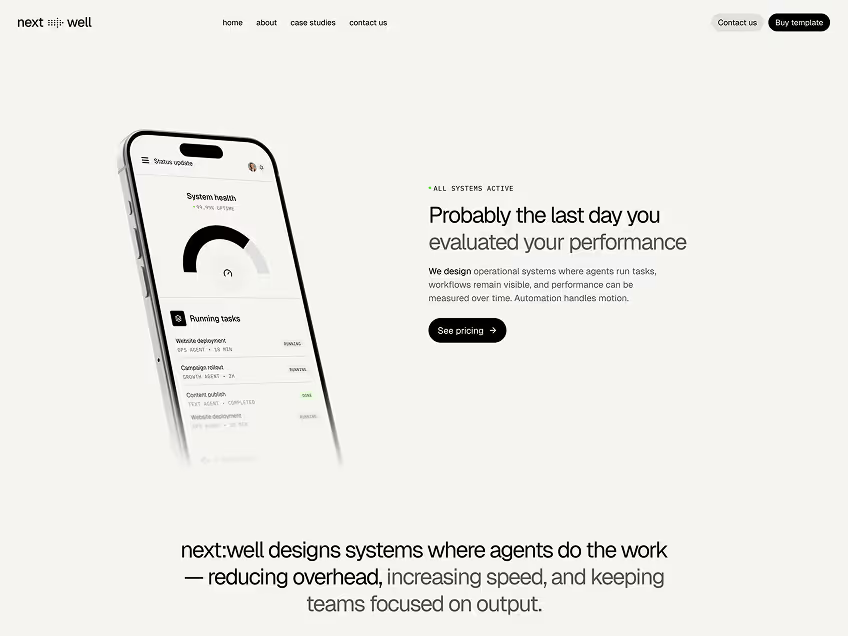



next:well designs systems where agents do the work — reducing overhead, increasing speed, and keeping teams focused on output.

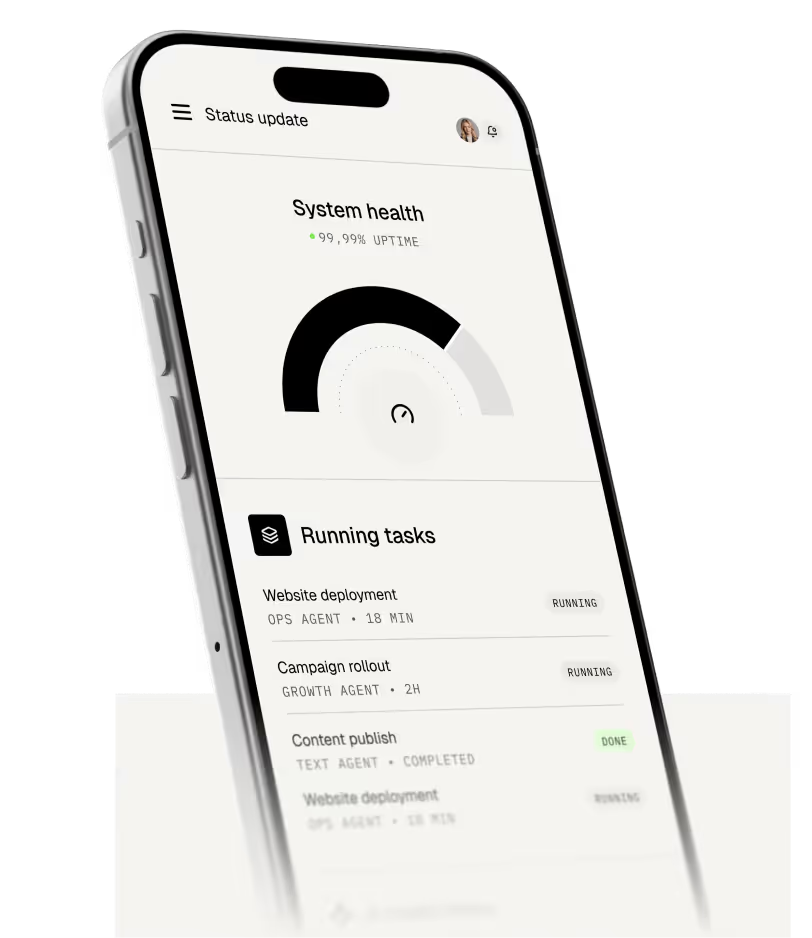
Running tasks
Boosting performance keeps work moving faster by optimizing how tasks are picked up, processed, and completed.
Increasing security ensures systems stay protected while work runs, with safeguards built into execution rather than added as an afterthought.

System health
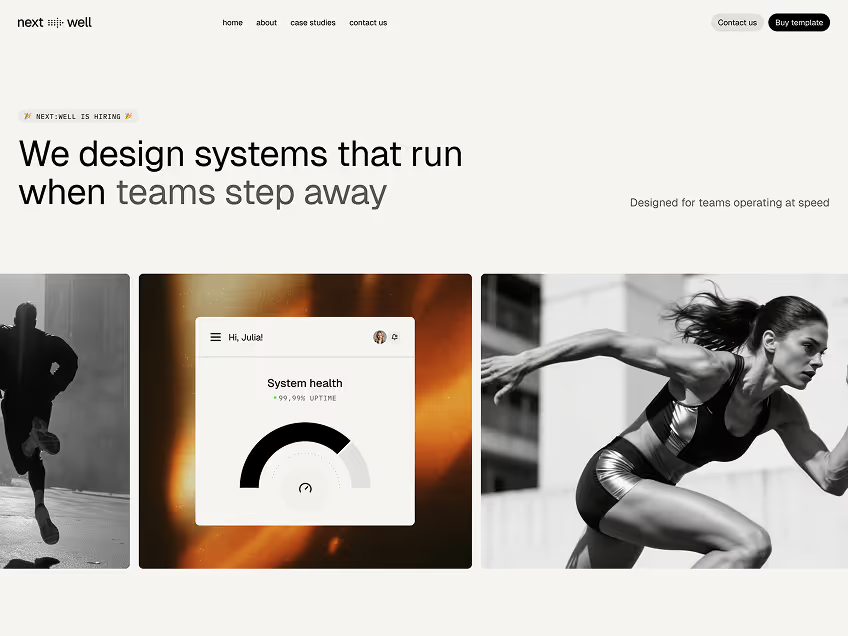
System health gives teams a real-time view of operational stability, highlighting uptime, agent activity, and workflow consistency. Instead of reacting to issues after impact, teams can monitor performance continuously and spot anomalies early.
Proactive visibility improves reliability over time, ensuring that systems remain stable under load and capable of scaling without unexpected interruptions.
Exacution history
Execution history provides a structured log of past runs, including outcomes, duration, and agent behavior. Teams can trace exactly what happened, when it happened, and why, without relying on assumptions or scattered notes.
Historical transparency strengthens accountability and optimization, making it easier to refine workflows, reduce recurring errors, and improve execution patterns over time.



Runtime behavior
Clear, observable, and controlled
Tasks move through a deterministic execution pipeline where agents pick up work based on context and availability, execute autonomously, and report outcomes in real time.
Execution speed adjusts dynamically based on system load, task complexity, and agent capacity to prevent bottlenecks and degradation under pressure.
Failures are isolated at the task level, allowing retries or rerouting without blocking parallel execution or cascading system slowdowns.
All executions are logged with timestamps, agent context, and outcomes, making system behavior transparent without additional instrumentation.



Our approach combines strategy, automation, and execution into a single operational flow.
From interfaces to workflows, we build systems that reduce friction and increase throughput.


We are no-code but in case your devs need it, we have it.
Define tasks, assign agents, and run workflows with clear boundaries and reliable logging. Failures are isolated, retries are controlled, and execution remains predictable under load.
“What I liked most was that execution stayed predictable even when load wasn’t. Nothing stalled silently.”

import { Nextwell } from "@nextwell/sdk";

const nw = new Nextwell({ token: process.env.NEXTWELL_TOKEN! });

const run = await nw.tasks.run({
  task: "deployment.request",
  inputs: { service: "web", env: "production", version: "v2.4.1" },
  priority: "high",
  constraints: { maxRetries: 3, timeoutSec: 900 },
});

console.log("run_id:", run.id);
console.log("status:", run.status);
import { Nextwell } from "@nextwell/sdk";
const nw = new Nextwell({ token: process.env.NEXTWELL_TOKEN! });
const run = await nw.tasks.run({
task: "deployment.request",
inputs: { service: "web", env: "production", version: "v2.4.1" },
priority: "high",
constraints: { maxRetries: 3, timeoutSec: 900 },
});
console.log("run_id:", run.id);
console.log("status:", run.status);import { Nextwell } from "@nextwell/sdk";
const nw = new Nextwell({ token: process.env.NEXTWELL_TOKEN! });
const run = await nw.tasks.run({
task: "deployment.request",
inputs: { service: "web", env: "production", version: "v2.4.1" },
priority: "high",
constraints: { maxRetries: 3, timeoutSec: 900 },
});
console.log("run_id:", run.id);
console.log("status:", run.status);import { Nextwell } from "@nextwell/sdk";
const nw = new Nextwell({ token: process.env.NEXTWELL_TOKEN! });
const run = await nw.tasks.run({
task: "deployment.request",
inputs: { service: "web", env: "production", version: "v2.4.1" },
priority: "high",
constraints: { maxRetries: 3, timeoutSec: 900 },
});
console.log("run_id:", run.id);
console.log("status:", run.status);Engineered for sustained performance Built to run consistently under pressure.
We define what matters, what moves, and what scales
We define what matters, what moves, and what scales
We define what matters, what moves, and what scales
The system continuously monitors capacity and adjusts execution
Repeated actions inform smarter execution paths over time.
Failures are isolated and handled gracefully, keeping rest running
A task in motion —
from request to completion
Execution in next:well follows a clear operational flow. Tasks are created, picked up by agents, processed, verified, and logged — with visibility at every stage. Below is a real-world example of how a task moves through the system.




Start a conversation. When it makes sense
We’re happy to talk.